
Upper Lip Hair Removal at Home (and Will It Grow Back Thicker?)
The painless way, and whether it grows back thicker.
 By VIFERA Team · · Updated

The painless way, and whether it grows back thicker.
By VIFERA Team · · Updated
Key takeaways
The upper lip is the most sensitive spot on the face to remove hair from. It's where threading makes your eyes water, where wax leaves a red line for an hour, and where a pimple appears the day after.
It's also the spot most women want to tidy most often. Here's how to remove upper lip hair at home, the method that hurts least, and the answer to the one question everyone asks.
Completely. Most women have fine hair on the upper lip, and many have a few darker hairs at the corners. It often becomes more noticeable with age. Removing it is a choice, not a need.
If thick, dark hair appears suddenly, or comes with irregular periods or acne, see a doctor. The NHS says hormone changes are a common cause and can be treated.
Not if you trim or shave it. According to Cleveland Clinic, cutting hair doesn't make it grow back thicker, darker or faster. The hair you cut was tapered at the tip; the regrowth has a blunt edge, so it can feel coarser for a few days. That's all.
Methods that pull hair from the root, like threading and waxing, don't make it thicker either.
How it works: a twisted thread pulls hairs out from the root.
Pain: high on the upper lip.
Lasts: 3 to 4 weeks.
Good to know: dermatologists say threading causes little irritation, but done badly it can cause ingrown hairs.
How it works: wax sticks to the hair and pulls it out.
Pain: moderate to high.
Lasts: 3 to 4 weeks.
Good to know: the American Academy of Dermatology warns against waxing if you use tretinoin on your skin or have taken isotretinoin in the past 6 months, because the skin can tear when the wax comes off.
How it works: chemicals dissolve the hair just below the surface.
Pain: none, unless your skin reacts.
Lasts: a little longer than shaving.
Good to know: use only a face cream, patch test it a day before, and rinse it off at the first sting.
How it works: it lightens the hair so it's harder to see.
Pain: a tingle.
Lasts: until the hair grows out.
Good to know: the hair is still there, and bleach can irritate sensitive skin.
How it works: tiny blades behind a guard cut the hair at the surface.
Pain: none.
Lasts: a few days.
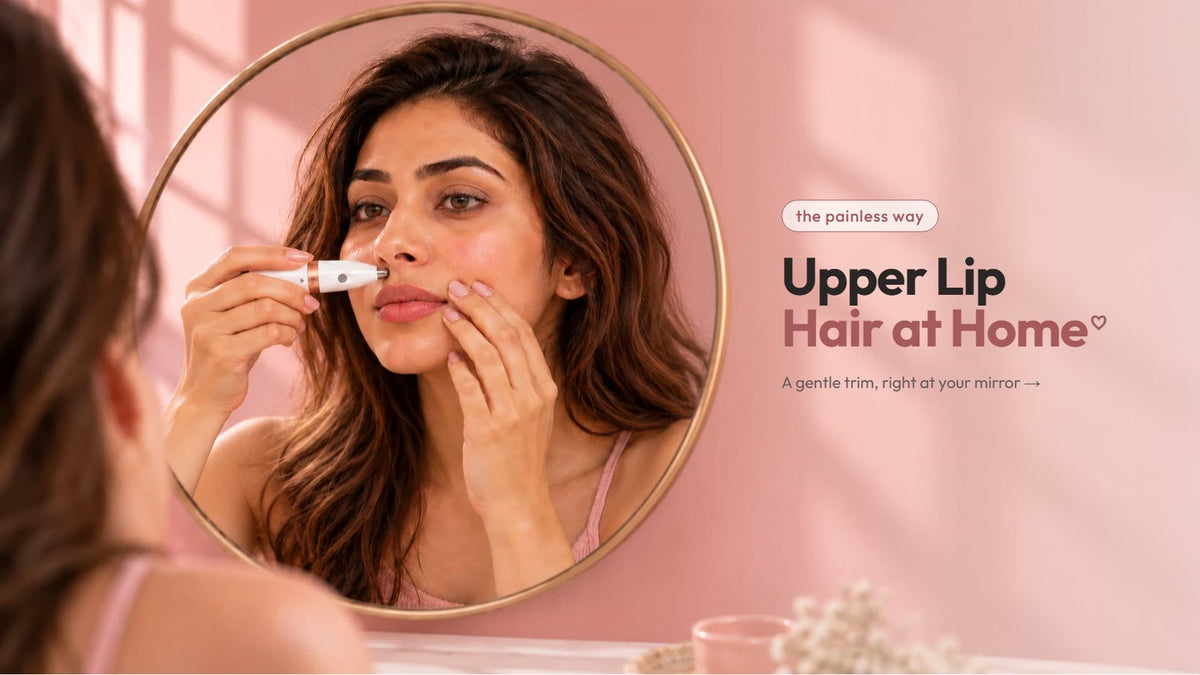
Good to know: no chemicals, no heat, no pulling, and it takes about a minute.
Read next: How to Remove Facial Hair at Home Without Pain: 7 Methods Compared and Does Facial Hair Removal Cause Acne? What Really Happens to Your Skin.
Sources
Facts and prices checked on 7 October 2026.
A face trimmer is the most comfortable: it's painless, takes a minute and doesn't irritate the skin. Threading and waxing last longer but hurt more on the upper lip.
No. Cutting hair doesn't change the root, so it can't make hair thicker or darker. Regrowth may feel blunt for a few days.
With a trimmer, whenever you see regrowth, usually every few days to a week. With threading or waxing, every 3 to 4 weeks.
Only a cream made for the face, and only after a patch test 24 hours before. Rinse it off at the time on the pack, or sooner if it stings.
Pulling hairs out can irritate the follicles or cause ingrown hairs, which look like small bumps. Keep the area clean, don't touch it, and try a trimmer if it keeps happening.
More Face guides
 How to Remove Facial Hair Naturally at Home: What Works and What Doesn't
Besan, turmeric, sugar wax or a trimmer: what really works.
 Which Face Trimmer Is Best for Women? A Buying Guide for India
What to look for, head by head, before you buy.
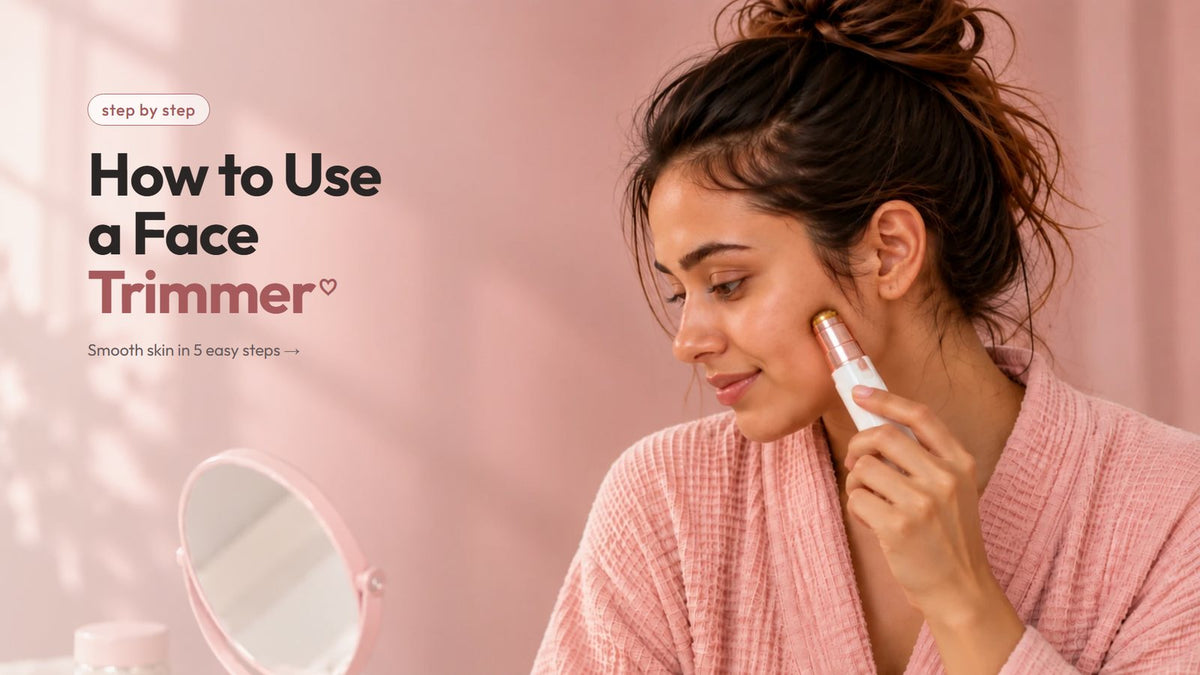 How to Use a Face Trimmer: Step by Step for the Upper Lip, Chin and Brows
Step by step for the upper lip, chin, cheeks and brows.
Painless trimmers for your face, brows and body. Smooth whenever you want, wherever you are.
Shop the range


