
Does Facial Hair Removal Cause Acne? What Really Happens to Your Skin
Why bumps appear after hair removal, and how to stop them.
 By VIFERA Team · · Updated

Why bumps appear after hair removal, and how to stop them.
By VIFERA Team · · Updated
Key takeaways
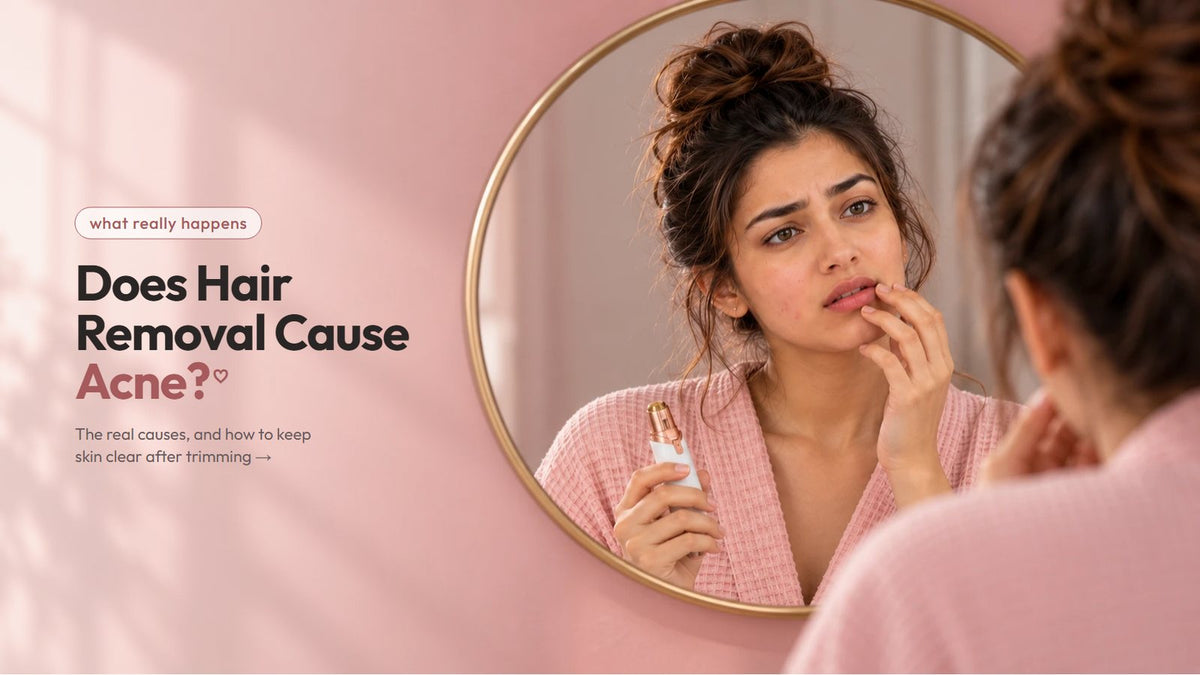
You thread your upper lip on Saturday and by Monday there's a cluster of tiny bumps. You wax your chin and a pimple appears exactly where the strip was. So does hair removal cause acne?
Not exactly. But it can cause bumps that look a lot like it. Here's what's really going on, which methods are kindest to acne-prone skin, and how to stop the breakouts.
Acne happens when hair follicles get blocked with excess oil and dead skin cells, the NHS explains. Bacteria can then grow in the blocked follicle and cause redness and pus. Hormones play a big part, which is why acne is so common in teenagers and around periods.
Removing hair doesn't change your hormones or your oil, so it doesn't cause true acne by itself. What it can do is irritate the follicles.
The American Academy of Dermatology calls folliculitis an infection in the hair follicles that usually looks like a sudden acne breakout, often with a red ring around each spot. It starts when follicles are damaged, for example by shaving or by rubbing the skin, letting germs that live on the skin get inside.
When a hair grows back into the skin, it makes a raised, itchy bump. The NHS says waxing, plucking and threading can all lead to ingrown hairs, as well as close shaving. They're more common with coarse or curly hair.
Hair removal creams and bleach can irritate the skin. A reaction to something put on the skin, called contact dermatitis, can leave the skin itchy, dry and bumpy.
Threading: dermatologists say it causes little irritation and suits sensitive or acne-prone skin, but it can cause ingrown hairs if done badly, and it hurts.
Waxing: hard on acne-prone skin, and not safe if you use tretinoin or have taken isotretinoin in the past 6 months, as the skin can tear.
Creams and bleach: risky on breakouts, as the chemicals can sting and irritate.
Trimming: gentle, because nothing is pulled out and nothing is put on the skin. You can trim around spots instead of over them.
See a doctor or dermatologist if the bumps are painful, hot or swollen, have a lot of pus, keep coming back, or if your acne is getting worse. If you also notice new thick, dark facial hair or irregular periods, mention it: hormone changes like PCOS can cause both.
Read next: Face Trimmer Side Effects: Is It Safe for Your Skin? and How to Remove Facial Hair Naturally at Home: What Works and What Doesn't.
This article is for general information only and isn't medical advice. See a doctor or dermatologist about acne that is painful or keeps coming back.
Sources
Facts and prices checked on 7 October 2026.
Not true acne, but it can cause acne-like bumps: folliculitis when follicles are damaged, ingrown hairs after threading, waxing or close shaving, and irritation from creams.
A face trimmer cuts hair at the surface, so it's less likely to irritate follicles than pulling hair out. Keep the head clean, don't share it and don't trim over pimples.
Choose a gentle method like trimming, work around active spots, use a clean tool, and avoid waxing if you use tretinoin or have taken isotretinoin in the past 6 months.
Threading can irritate the follicles or cause ingrown hairs, which look like small pimples. Keep the area clean and don't touch it for a day.
Hair doesn't cause acne. Acne comes from blocked follicles, oil and bacteria. But irritated follicles after hair removal can look like a breakout.
More Face guides
 How to Remove Facial Hair Naturally at Home: What Works and What Doesn't
Besan, turmeric, sugar wax or a trimmer: what really works.
 Which Face Trimmer Is Best for Women? A Buying Guide for India
What to look for, head by head, before you buy.
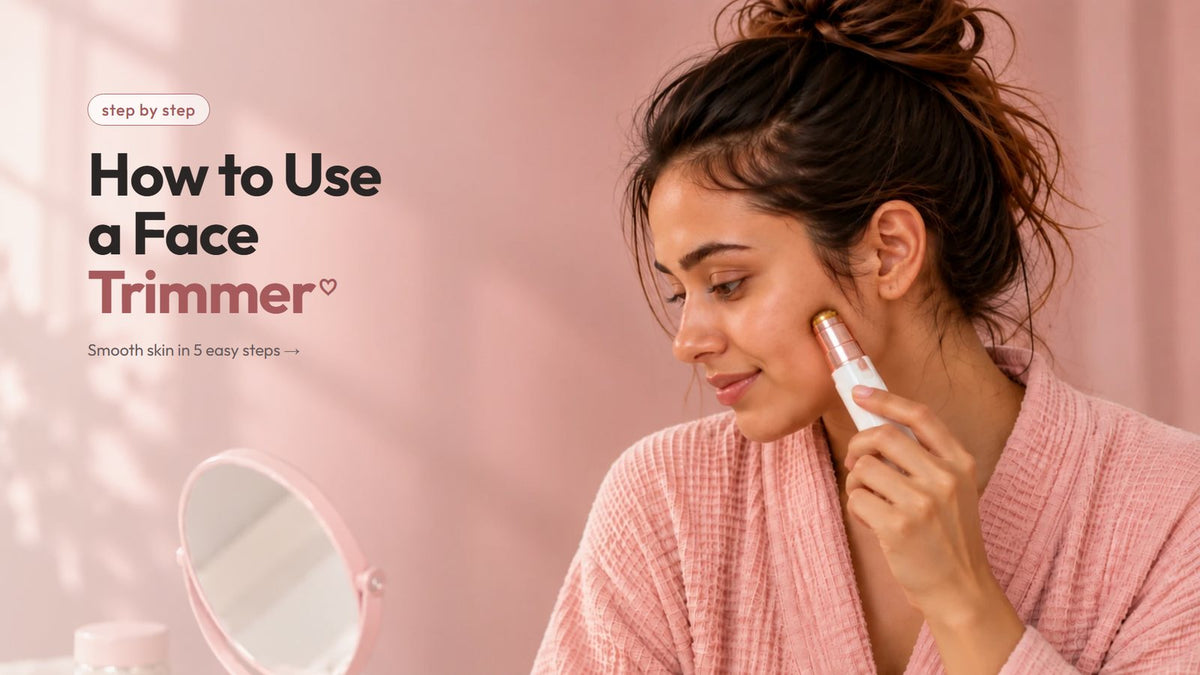 How to Use a Face Trimmer: Step by Step for the Upper Lip, Chin and Brows
Step by step for the upper lip, chin, cheeks and brows.
Painless trimmers for your face, brows and body. Smooth whenever you want, wherever you are.
Shop the range


